
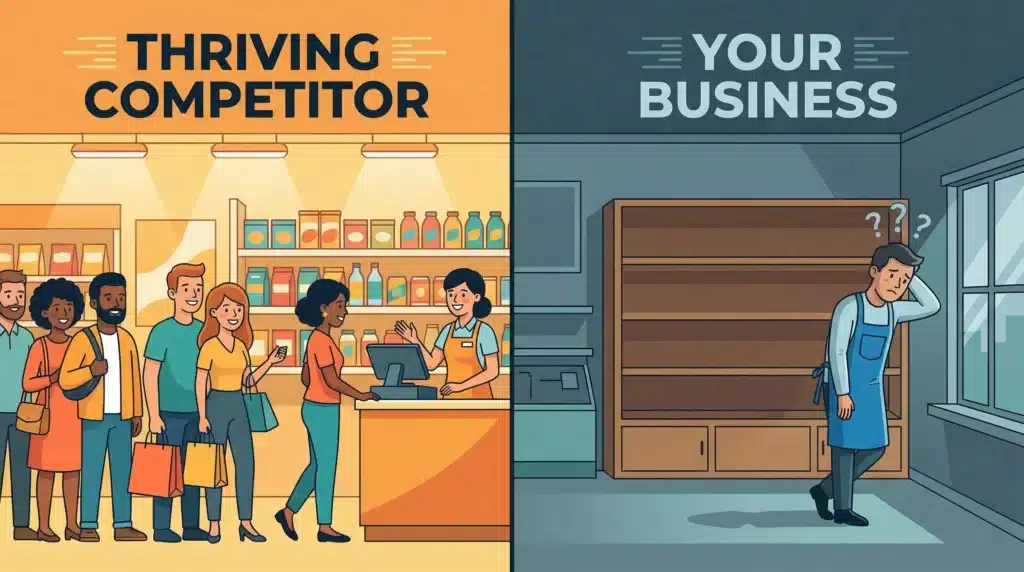
why customers choose competitors
You work hard. You know your product is good. Your service is better than most. But somehow, customers keep choosing your competitors. It doesn’t make sense. You’ve lowered prices. You’ve tried harder. Nothing changes. Here’s the truth nobody tells you: it’s not about your product, price, or skill. The real reason why customers choose competitors comes down to one thing. Trust. And customers decide if they trust you before they ever talk to you. In this article, you’ll learn exactly why this happens. You’ll see what your competitors understand that you don’t. And you’ll discover simple steps to fix it—starting today.
The Real Reason You're Losing Customers to Competitors
Most business owners blame the wrong things. They think customers leave because of price. Or because competitors have better products.
That’s rarely true. Let’s look at what’s really happening.
It's Not Your Product, Price, or Service
Here’s a surprising fact. Only 17% of customers say price is their main reason for choosing.Think about that. Price matters—but it’s not the biggest factor.
What matters more? Perceived trust and reliability.
Customers want to feel safe. They want to know you’re real. They want proof you’ll deliver what you promise.
Key Takeaway: Customers don’t choose the cheapest option. They choose the option they trust most.
Let me share a quick story. A skilled contractor kept losing jobs to less experienced competitors. He couldn’t figure out why. His work was better. His prices were fair.
Then a customer told him the truth: “We couldn’t find anything about you online. We weren’t sure you were legitimate.”
His competitors weren’t better. They were just easier to verify.
How Customers Decide Before They Ever Contact You
Here’s something most business owners don’t realize.
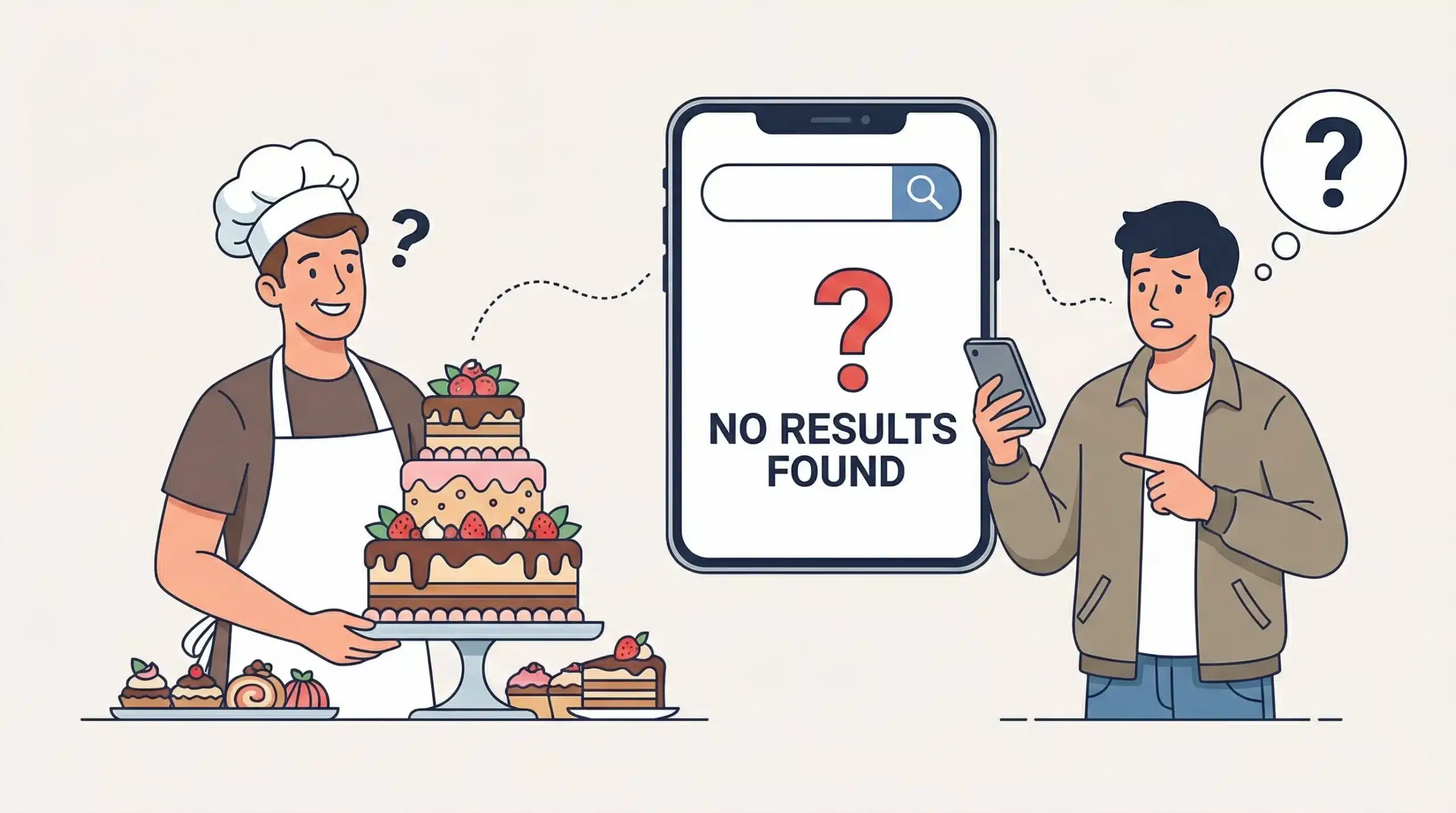
By the time a customer calls you, they’ve already made their decision. The research happened silently. You never knew about it.81% of consumers research online before buying anything. They compare options. They look for red flags. They eliminate businesses that seem risky.
This happens without your knowledge. You never get a chance to explain yourself.
Key Takeaway: Customers choose winners during their research phase—not during your sales pitch.
Google calls this the “zero moment of truth.” It’s the moment customers decide—before any conversation happens.
If you’re not part of that research moment, you’re not part of the decision.
The Invisible Evaluation You're Failing
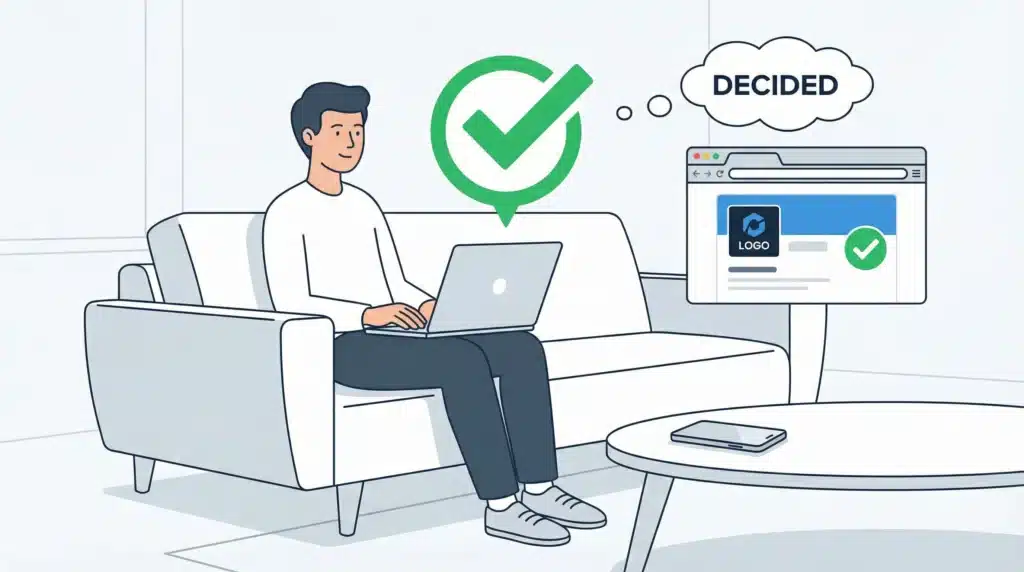
Every customer has an unconscious checklist. They don’t write it down. They don’t even know they’re doing it.But they ask themselves three questions:
- Can I find this business easily?
- Do they look legitimate?
- Can I verify their claims?
If any answer is “no,” customers move on. They don’t call to ask questions. They just disappear.
You never know they existed. You never get a chance to win them back.
This is why your business is not getting customers—even when your service is excellent.
Why Customers Don't Trust Your Business (Yet)
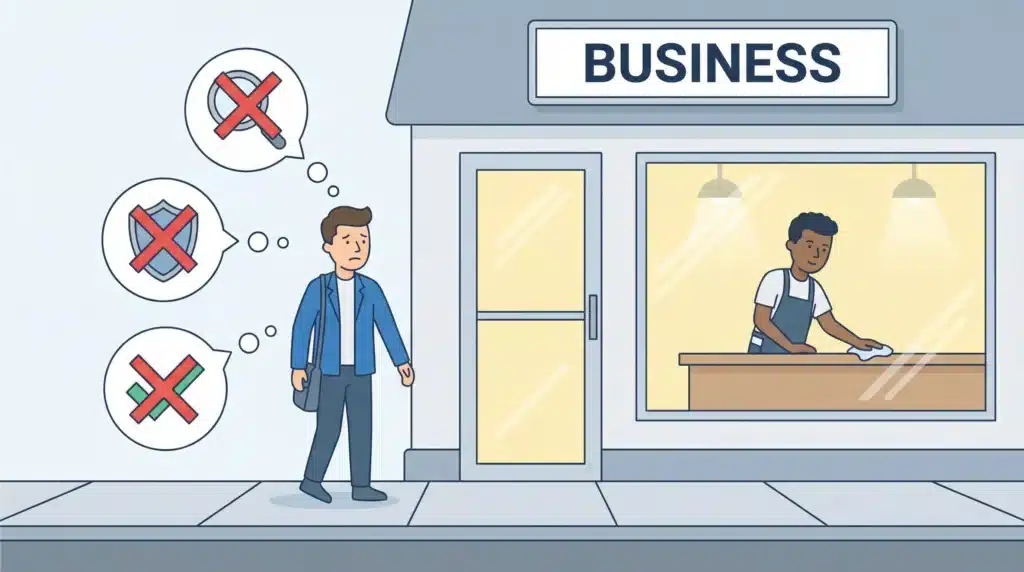
Let’s dig deeper into this trust problem. Understanding it is the first step to fixing it
The Trust Crisis Affecting Small Businesses
Trust drives almost every buying decision. Studies show 88% of purchases are trust-based.And here’s the scary part: 81% of consumers won’t buy from brands they don’t trust.
Why are customers so suspicious? Because they’ve been burned before. Internet fraud costs consumers $16.6 billion every year. Fake businesses, scam artists, and broken promises are everywhere.
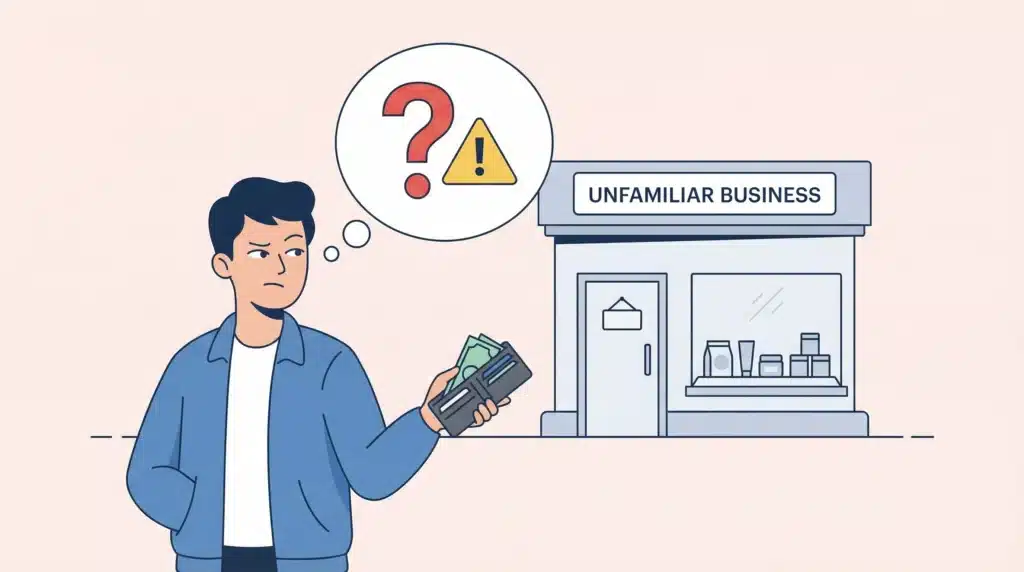
Customers have learned to be careful. When they encounter an unfamiliar business, their default is suspicion. You’re guilty until proven innocent.
Key Takeaway: It’s not personal. Customers are protecting themselves from scams. Your job is to prove you’re safe.
The Small Details That Kill Customer Trust
69% of customers abandon purchases because of trust red flags.
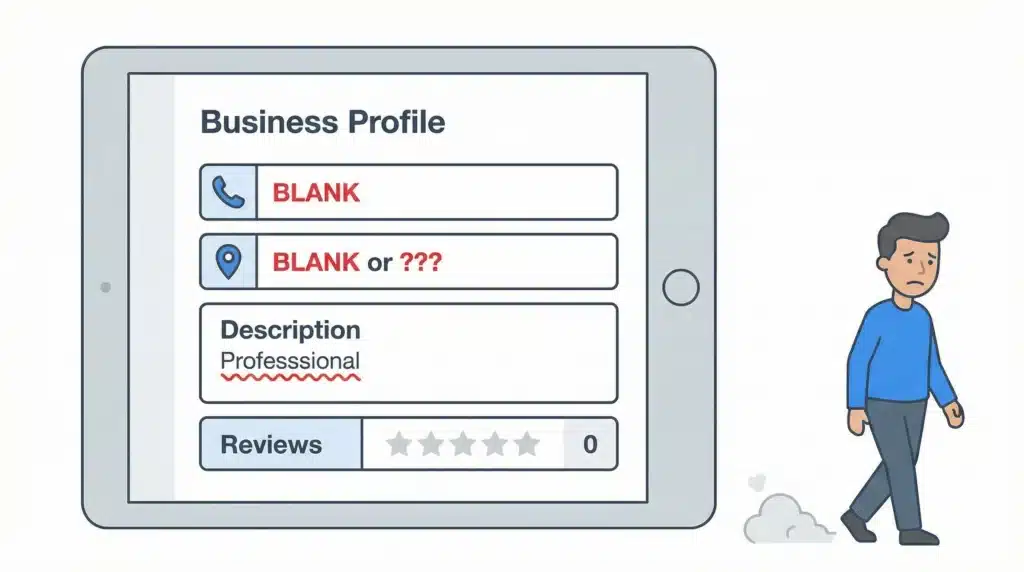
What triggers these red flags? Small things you might not notice:
- Missing contact information (no phone number or address)
- Poor grammar and spelling mistakes
- Vague policies and unclear pricing
- Generic stock photos instead of real images
- No reviews or testimonials
Customers notice what’s missing more than what’s there.
One study found something interesting. An online store added just a physical address and phone number. Conversions jumped 30%.
Customers didn’t call that number. They didn’t visit that address. But seeing it made them feel safe.
Key Takeaway: Trust killers are often invisible to you—but obvious to customers.
The Credibility Gap That's Widening Every Year
This problem is getting worse, not better.
73% of consumers think less of brands with incomplete online information. That number grew 11% from last year.
Customer expectations are rising. Their tolerance for uncertainty is falling.
Younger customers—millennials and Gen Z—are especially strict. They won't engage with businesses they can't verify online.
Your competitors who've addressed this gap are pulling further ahead. Every year, the distance grows.
What Your Competitors Understand That You Don't
What Your Competitors Understand That You Don’t
They're Visible When Customers Search
46% of all Google searches are location-based. People search "plumber near me" or "best coffee shop nearby."
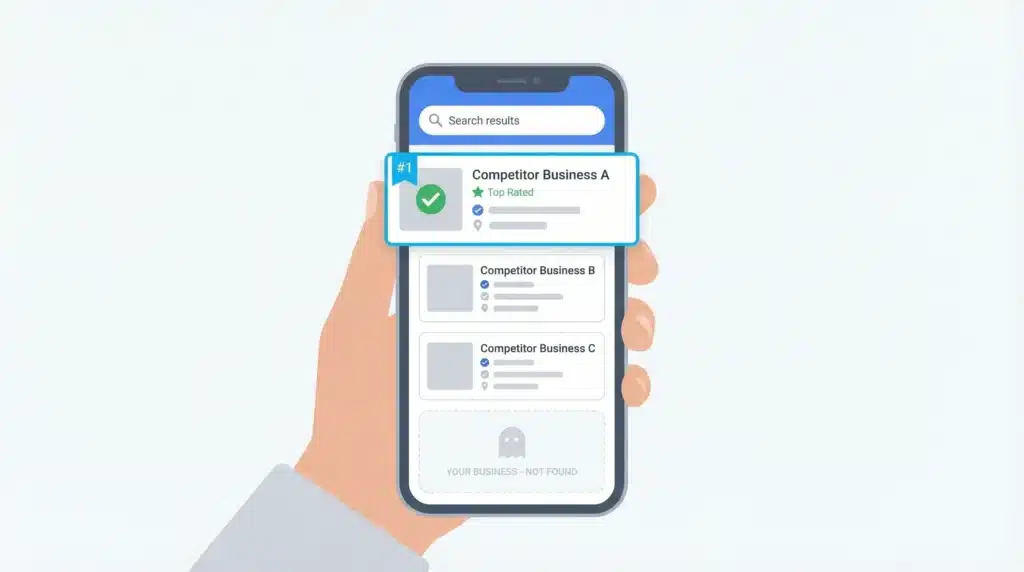
Here's the problem: only 4% of businesses show up in local search results.
That tiny 4% captures 53% of all clicks.
If you're not in that group, customers don't find you. Your competitors get all the attention.
Think about two plumbers in the same city. Same skill level. Same prices.
One shows up when people search. One doesn't.
The visible plumber gets 10 times more calls. Not because he's better. Because he's findable.
Key Takeaway: Being great doesn't matter if customers can't find you.
They Answer Questions Before Customers Ask
Remember: 59% of customers prefer finding answers themselves. They don't want to call and ask basic questions.
50% of customers abandon purchases because they can't find enough information.
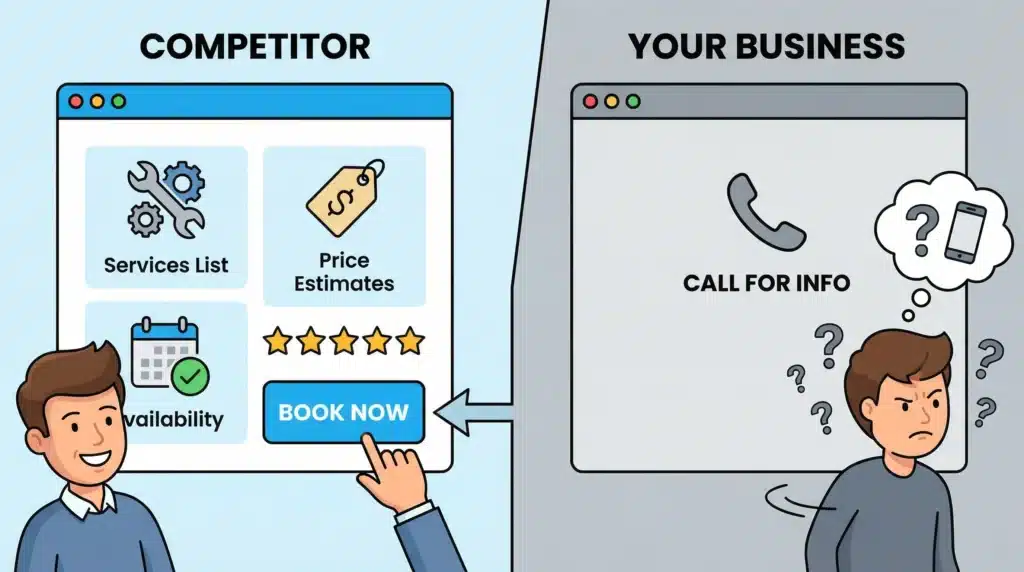
Your competitors understand this. They provide information upfront:
- Clear list of services offered
- Transparent pricing (or at least price ranges)
- Answers to common questions
- Explanation of how their process works
A yoga studio made one simple change. They added clear booking buttons and service descriptions. Conversions jumped from 2% to 10%.
Same studio. Same classes. Just better information.
Key Takeaway: The business that answers questions first usually wins the customer.
They Look Established, Professional, and Safe
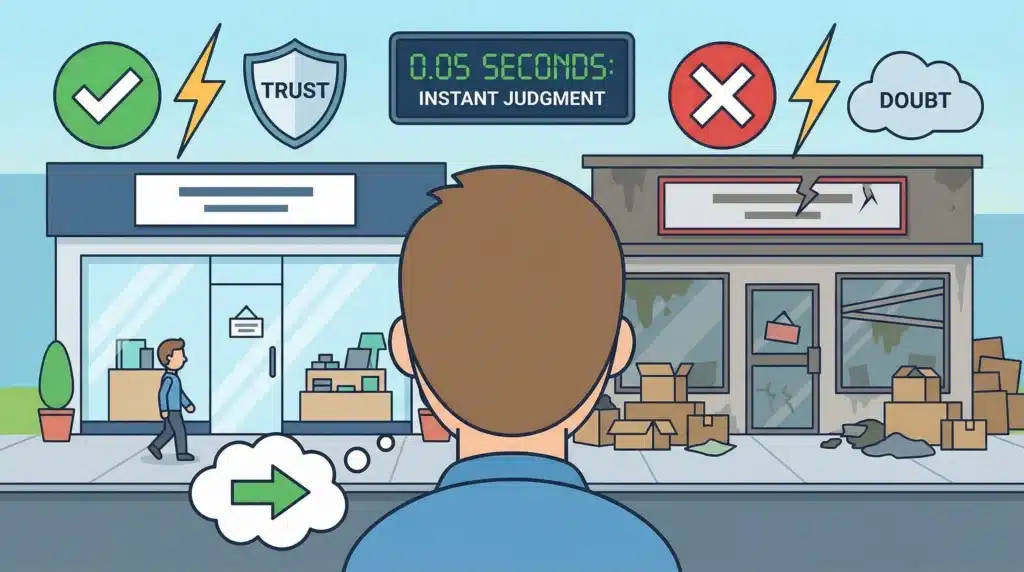
First impressions happen fast. Really fast.
Research shows customers judge credibility in 0.05 seconds. That's faster than a blink.
They decide if you look trustworthy before reading a single word.
Professional presentation signals reliability. It tells customers: "This business is real. This business is established. This business is safe."
Your competitors invest in looking credible. Customers reward them with trust—and money.
The Hidden Customer Journey You're Not Part Of
There’s a whole journey happening without you. Let’s make it visible.
Where Modern Customers Actually Discover Businesses
Customer search behavior is changing fast.
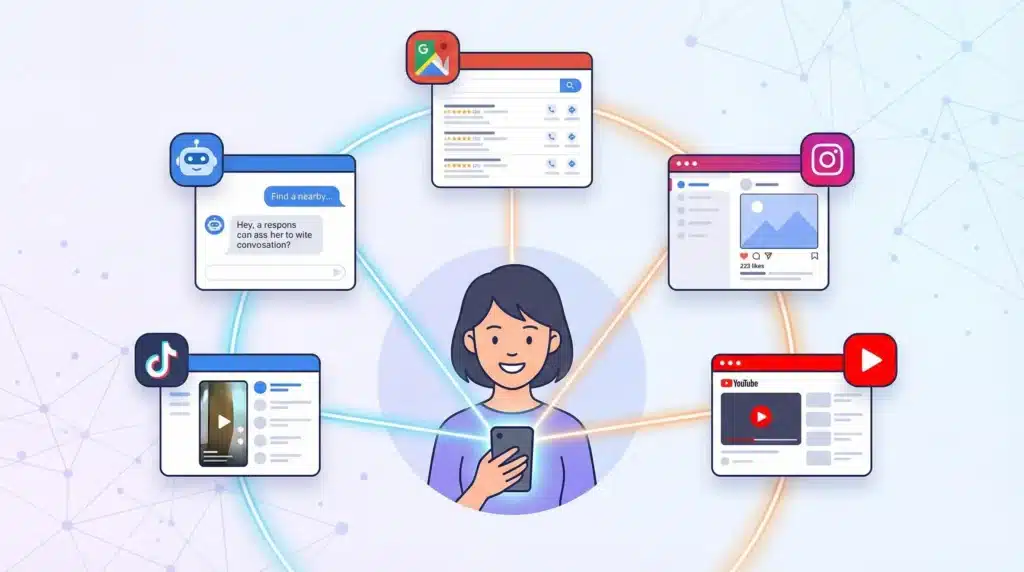
People don't just use Google anymore. They discover businesses through:
- Social media (36% of discoveries)
- YouTube videos
- TikTok recommendations
- AI chat tools (72% plan to use AI for searching)
Gen Z uses TikTok and Instagram like search engines. They type "best tacos in [city]" directly into social apps.
If you're absent from all these places, you're invisible. Word-of-mouth alone can't compete.
The Information Your Customers Desperately Want
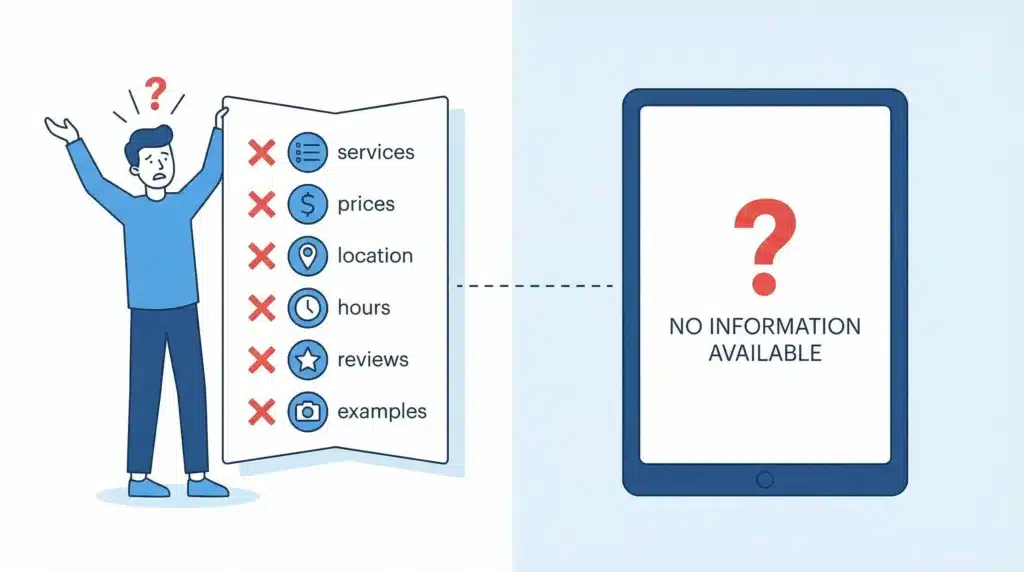
What do customers search for? The same things every time:
- What services do you offer?
- How much does it cost?
- Where are you located?
- What hours are you open?
- Do you have good reviews?
- Can I see examples of your work?
83% of visitors leave when they can't find this information quickly.
The business that answers these questions clearly—and first—usually wins.
The Exact Moment You Lose Them to Competitors
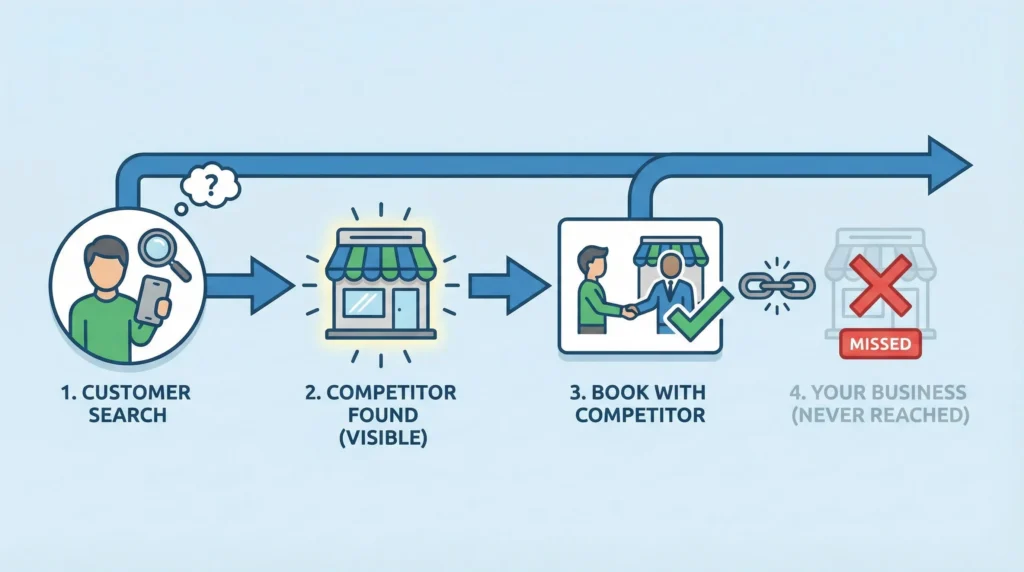
Here's how customers choose between businesses:
- Customer searches for a service
- They find your competitor first
- They verify the competitor looks legitimate
- They stop searching
You never had a chance. They didn't know you existed.
You're not losing sales. You're losing the opportunity to compete.
It's like having a store in a hidden alley. Your products might be amazing. But no one walks by to discover them.
How to Stop Losing Customers Starting Today
Now let’s fix this. Here are practical steps you can take right now.
Become Findable Where Your Customers Search
First, get visible. Here's how:
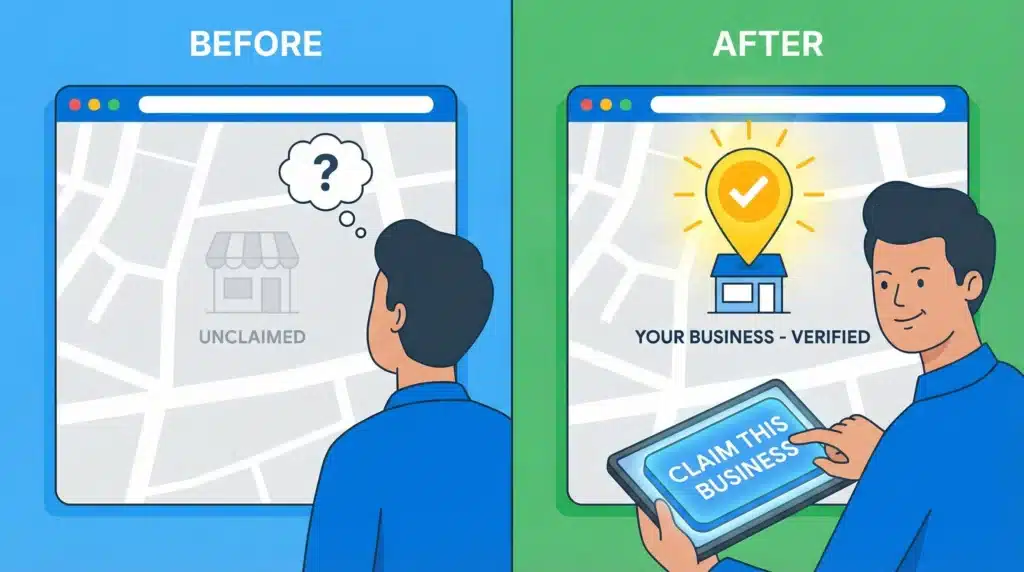
- Claim your Google Business Profile (it's free)
- Update your information on Yelp and industry directories
- Make sure your name, address, and phone number are consistent everywhere
Start with Google Business Profile. It's the most important free tool for local businesses.
When customers search "your service + near me," Google Business Profile helps you appear.
Action Step: Spend 30 minutes today claiming or updating your Google Business Profile.
Provide the Information Customers Need Upfront
Next, answer questions before customers ask:
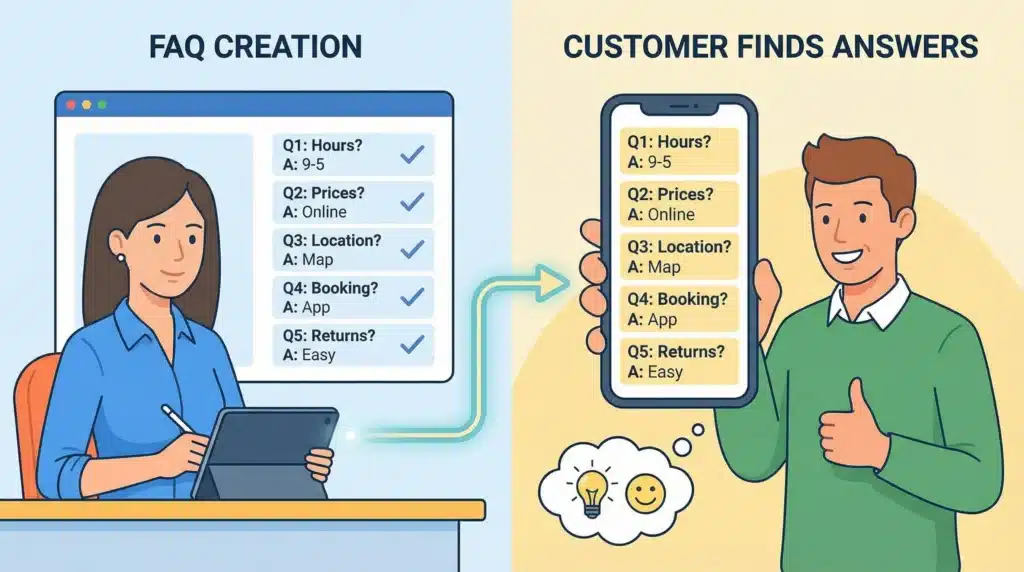
- Write down the 5 questions customers ask most often
- Make sure those answers are publicly visible
- List your services clearly with simple descriptions
- Show pricing or price ranges if possible
Don't make customers hunt for information. Give it to them immediately.
Action Step: Write your 5 most common customer questions. Then make those answers easy to find.
Build Trust Signals That Work 24/7
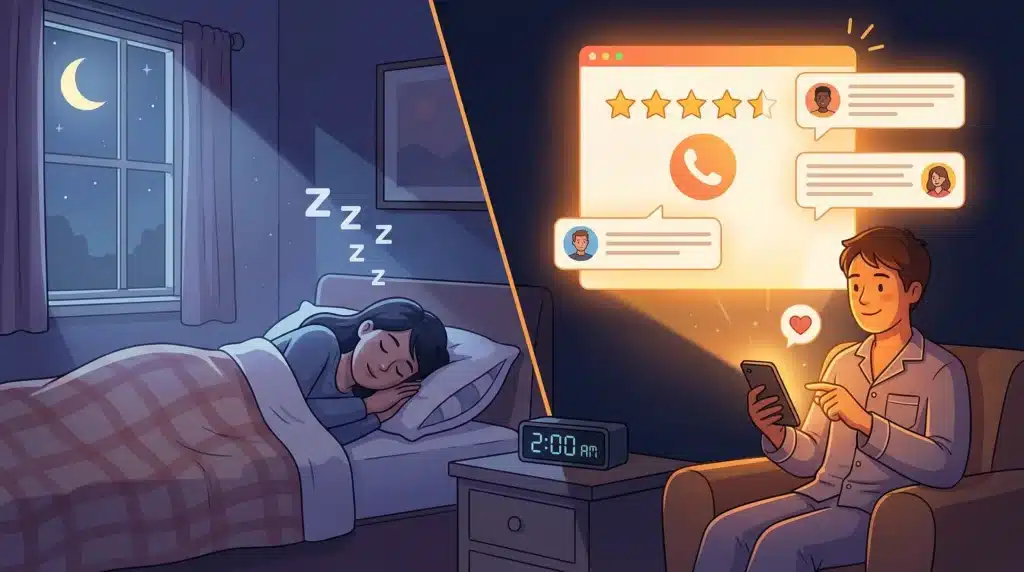
Finally, build credibility that works while you sleep:
- Display contact information prominently (phone, email, physical address)
- Use real photos of yourself, your team, and your work
- Collect customer reviews and display them publicly
- Ask happy customers for testimonials (aim for 3 this week)
These trust signals work around the clock. They reassure customers even at midnight.
Action Step: Ask 3 past customers for a review or testimonial this week.
The Choice Your Customers Are Making Right Now
Let's recap what we've learned.
Customers aren't choosing competitors because they're better. They're choosing them because they're visible, verifiable, and trustworthy at first glance.
88% of buying decisions come down to trust. And trust is built before any conversation happens.
Every day you don't address this, customers choose competitors without knowing you exist.
Here's the question to ask yourself:
When someone searches for what you offer, what do they find?
Is it enough to earn their trust? Or do they see question marks and move on?
Your best customers are searching right now. The only question is: will they find you—or your competitor?